Rollers Outside the Track
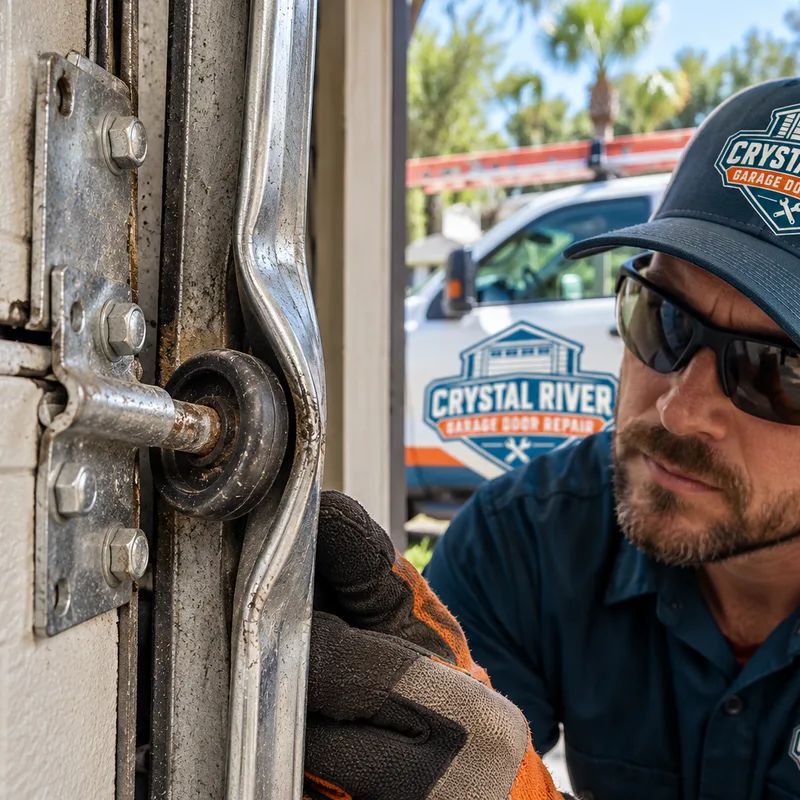
The door is stabilized before displaced rollers are returned to a usable track. Damaged or seized rollers may need replacement rather than simple repositioning.
Serving Crystal River, Florida & surrounding areas
Off-Track Repair in Crystal River, Florida
Restore safe, controlled door travel with a careful inspection, track realignment, and replacement of damaged hardware when needed.
Track & Roller Inspection
Crystal River
✓Track realignment
✓Roller inspection
✓Cable and drum checks
✓Door travel testing
Off-Track Door Safety
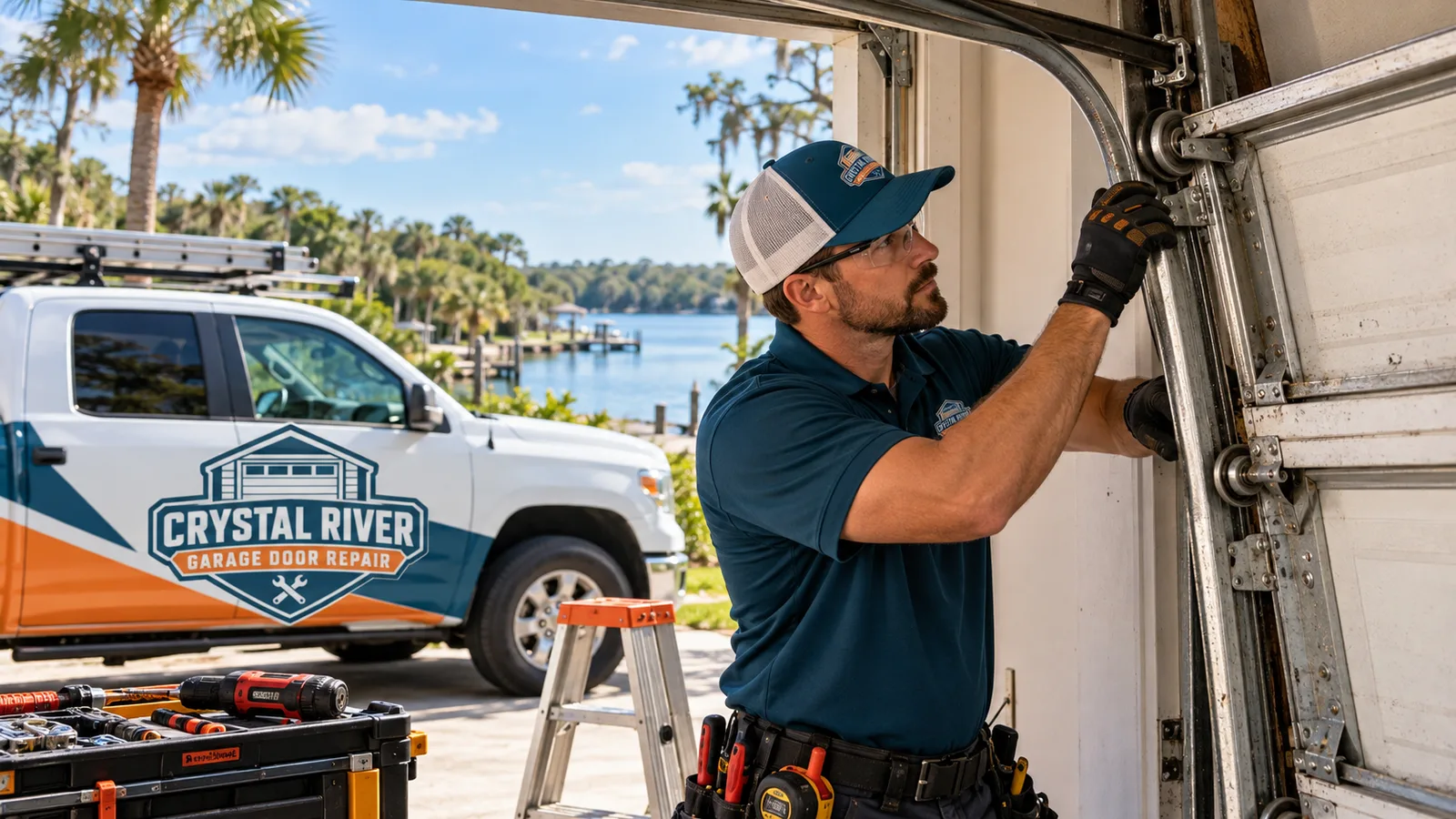
When rollers leave the track, the door can hang crooked, bind during travel, or become stuck partway open. Garage door off track repair Crystal River FL service starts by securing the door and finding out why it shifted. Crystal River Garage Door Repair can assess the tracks, rollers, hinges, cables, brackets, and related hardware before recommending the appropriate repair.
Do not keep pressing the wall control or remote when the door is crooked. An opener is designed to move a balanced door along a guided path. It is not meant to pull a jammed door back into position. Continued operation can bend track, pull fasteners loose, damage panels, or place more strain on the opener rail. Keep people, pets, and vehicles clear of the opening, and do not stand beneath a door that has come out of its tracks.
An off-track door is also a poor do-it-yourself project. The door is heavy, and the cable and spring system may still be under tension. Trying to force a roller into the track, loosen the bottom bracket, or move a tangled cable can cause the door to shift without warning. Leave the door where it is and arrange an inspection.
Finding the Cause
A door can come off track after a vehicle, lawn equipment, or another object strikes the bottom section. Impact may bend the vertical track, loosen a track bracket, deform a roller stem, or push the door out of square. The visible gap is often only part of the damage.
Worn rollers are another possible cause. A cracked nylon wheel, seized bearing, or bent stem may stop following the track correctly. Loose hinges and fasteners can let a section shift enough for a roller to escape. Cable trouble can also lift one side faster than the other, causing the door to rack in the opening. If a lift cable is slack, frayed, tangled, or off its drum, the cable system requires attention before the door is moved.
Florida's humid, salt-influenced air can contribute to corrosion on exposed garage door hardware, especially when coatings have worn away. Storm gusts and wind-driven debris may also affect a door that is open or partly open. These conditions do not identify the cause by themselves, so the repair should be based on a hands-on inspection rather than an assumption.
Repair Details
The door is stabilized before displaced rollers are returned to a usable track. Damaged or seized rollers may need replacement rather than simple repositioning.
Vertical and horizontal track sections are checked for dents, twists, spacing problems, and loose mounting brackets. Minor deformation may be corrected; severe damage may require a track section replacement.
A tilted door can point to a cable, drum, roller, hinge, or track problem. Both sides must be inspected so the door does not immediately bind again.
Track brackets, flag brackets, hinges, and related fasteners are checked for movement or damage. Fastening points also need sound material behind them.
A struck door may have bent track and damaged panels or hardware. The repair plan depends on whether the sections can still travel safely through the opening.
A slack cable or lost spring tension can mimic a track problem or cause one. High-tension components should be handled with the proper tools and procedures.
The Service Visit
Crystal River Garage Door Repair first considers the door's position and stability. A crooked or suspended door must be supported before track hardware or rollers are adjusted.
The assessment covers both vertical tracks, curved sections, horizontal tracks, rollers, hinges, brackets, cables, drums, springs, panels, and opener attachment points. This helps distinguish a track-only issue from a broader mechanical fault.
Depending on condition, work may include realigning track, correcting track spacing, reseating rollers, tightening suitable fasteners, or replacing damaged rollers, hinges, brackets, or track sections. Cable or spring defects require their own corrective work.
Tracks need correct spacing and must allow the rollers to travel without pinching or excessive side play. The door should remain square in the opening as it moves.
After repair, the door is moved through its travel to check for rubbing, binding, unusual noise, and uneven movement. Opener operation should be tested only after the door moves properly by hand.
Door Condition Checked
After Inspection
Track Condition
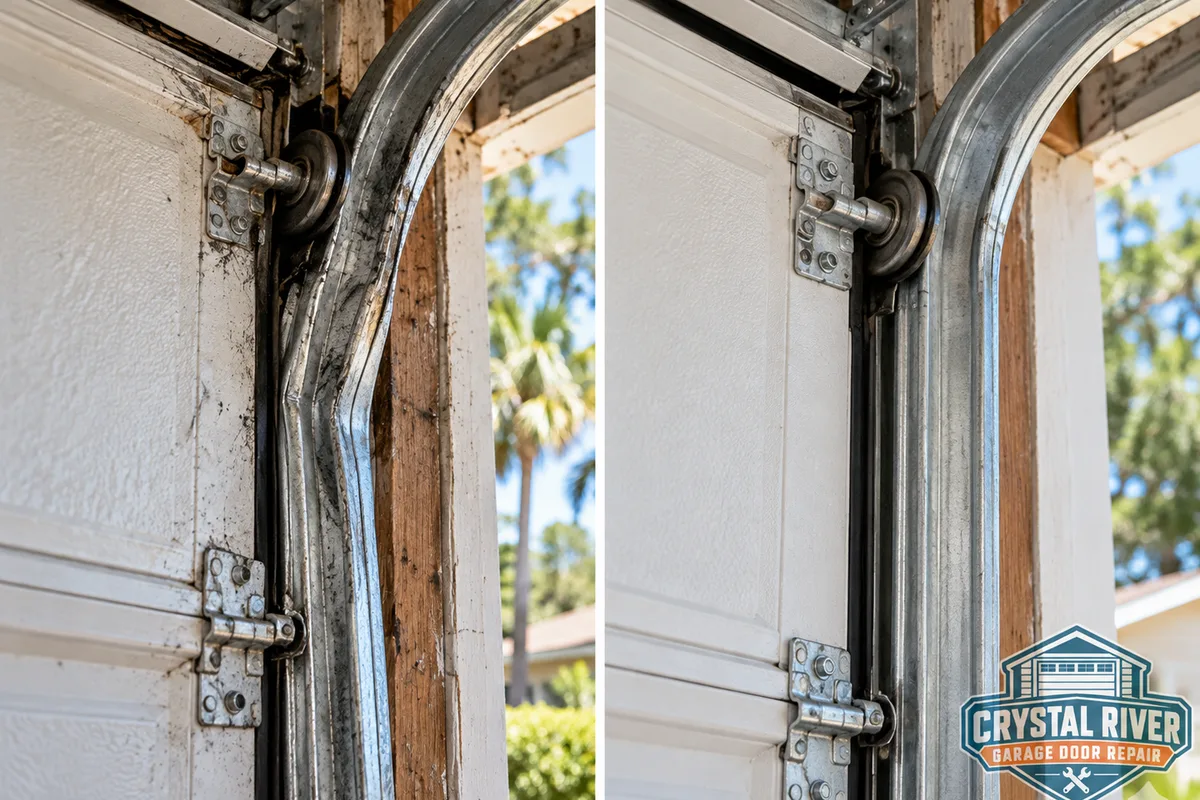
A track may be repairable when the damage is limited, the metal is not badly creased, mounting points remain sound, and proper roller clearance can be restored. A small alignment error is different from a track that has folded, split, or pulled away with damaged brackets.
Replacement is generally the better choice when a track section is sharply kinked, structurally weakened, heavily corroded, or no longer holds its intended shape. The replacement track must match the door system's configuration. Residential tracks vary by door thickness, roller size, headroom arrangement, radius, and manufacturer setup, so a piece should not be selected by appearance alone.
Track condition also cannot be judged in isolation. If an impact has buckled a door section, the panel may continue pushing rollers out of alignment. Likewise, a cable that winds unevenly can make a newly aligned track appear faulty. A complete inspection protects the repair from being undermined by an unresolved cause. For problems beyond the track system, garage door repair in Crystal River can address the door's related operating components.
Warning Signs
A roller visibly outside the track is an obvious warning, but track trouble can begin before complete derailment. Watch for a growing gap between the roller and track, scraping along one side, shaking during travel, or a door that rises unevenly. A track that moves at its wall brackets or has a crushed edge also needs inspection.
Stop operating the door if a lift cable hangs loose, one side drops lower than the other, a panel begins folding near a hinge, or the door makes a sudden pop followed by uneven movement. Disconnecting the opener does not automatically make the door safe to lift. A spring or cable fault can leave the full door weight unsupported.
Crystal River properties can be exposed to humid air and seasonal storms, so periodic visual checks are useful. Look for rust developing around fasteners, debris in the tracks, loosened brackets, and rollers that wobble or no longer turn freely. Do not apply grease inside the track. The rollers need a clean path, while lubrication requirements depend on the roller and hinge design.
A crooked or jammed door can worsen with each attempt to move it. Arrange an assessment so the door can be secured, the cause identified, and the necessary work clearly defined.
CALL NOW: (352) 770-7596Common Questions
Do not operate a door with a roller outside the track unless a qualified technician has confirmed that movement is safe. The door may twist, drop, bend another track section, or pull a cable out of position. Keep the opening clear and arrange service while the door remains stationary.
Some minor bends can be corrected when the metal remains structurally sound and the proper roller path can be restored. A sharply creased, split, twisted, or heavily corroded track generally calls for replacement. The rest of the door must also be square, or the problem may return.
Track correction will help only if misalignment is the actual cause of the tilt. A door that hangs lower on one side may have a displaced cable, drum issue, damaged roller, loose hinge, or spring-related problem. Both sides of the lifting system should be inspected before repair begins.
Do not pull the emergency release unless the door is fully closed and stable or a technician directs you to do so. Releasing an opener from a raised, crooked door can allow uncontrolled movement if the spring or cable system is compromised.
No. Tracks may be reused when they can be returned to correct alignment and have no serious crease, split, or loss of strength. Replacement depends on the track's condition, the mounting points, roller compatibility, and whether an impact changed the door sections themselves.
Call for Service
We support the door, inspect the tracks and lifting hardware, and correct the parts causing it to sit out of alignment.