Door Reverses While Closing
The sensor lenses may be dirty, brackets may have shifted, wiring may be damaged, or the close-force and travel settings may need correction. The door and track should also be checked for resistance.
Serving Crystal River, Florida & surrounding areas
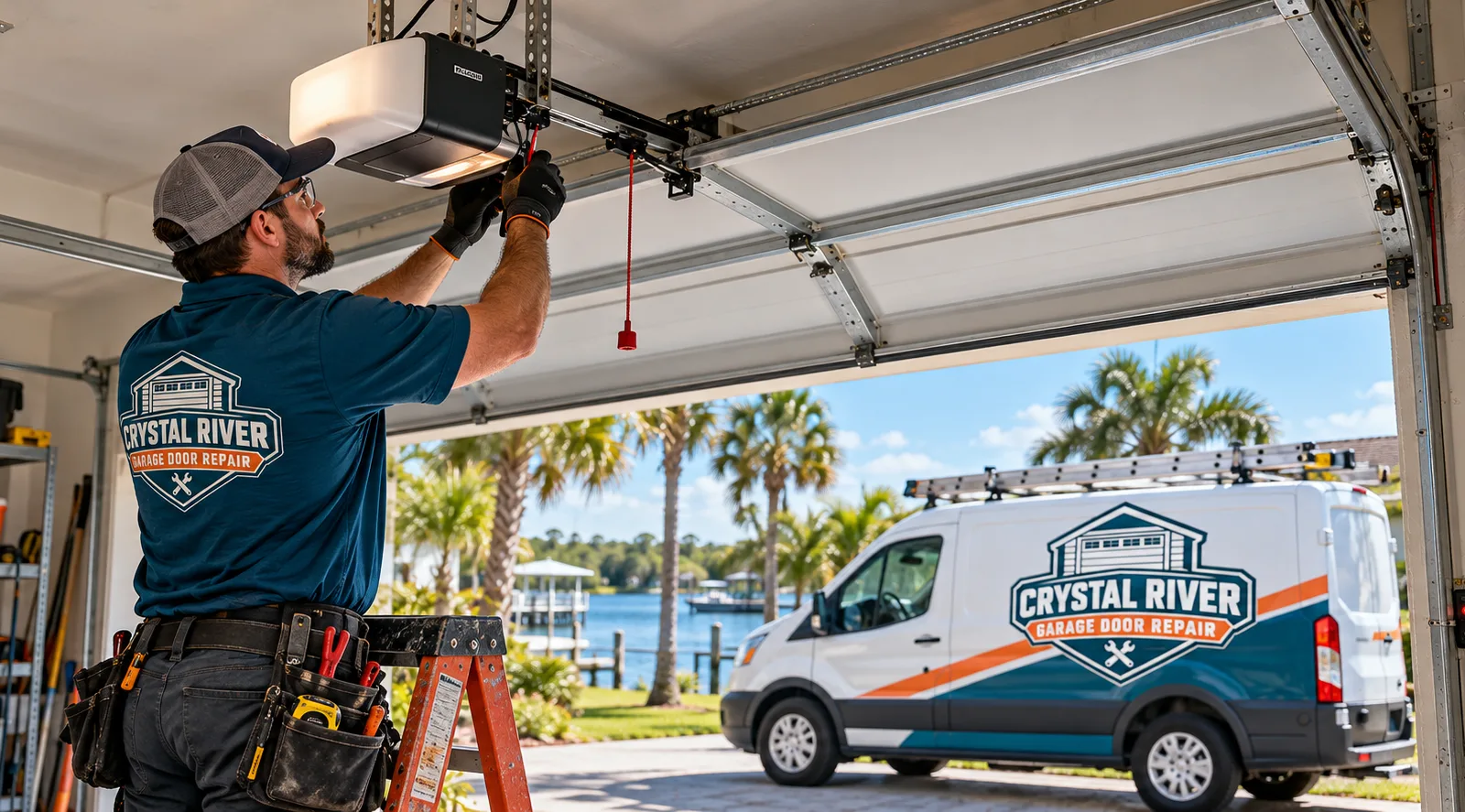
Opener Service in Crystal River, Florida
Get clear answers when an opener will not run, a remote stops responding, or the door reverses before reaching the floor.
Complete Opener Check
Crystal River
✓Chain and belt drive units
✓Safety sensor diagnosis
✓Remote and keypad setup
✓Wall control testing
Door and Opener Diagnosis
A dependable opener should move the door smoothly, stop when it meets an obstruction and respond consistently to its controls. Crystal River Garage Door Repair handles garage door opener installation in Crystal River, FL, as well as diagnosis and repair for existing systems. The work may involve chain-drive or belt-drive units, remotes, wireless keypads, wall buttons, travel settings and photoelectric safety sensors.
Installation begins with the door itself. An opener is designed to guide a properly balanced door, not lift a door that is excessively heavy because of a broken spring, binding roller or damaged track. A technician should disconnect the opener and test the door by hand before recommending a motor size or installing new equipment. That check helps separate an opener problem from a mechanical door problem.
Crystal River's humid, salt-influenced Gulf Coast air can contribute to corrosion at exposed brackets, fasteners and electrical contacts. Seasonal thunderstorms and power interruptions can also affect control boards and stored remote settings. These conditions make secure mounting, sound wiring and correct setup especially important. If the trouble extends beyond the operator, garage door repair in Crystal River may be needed before the opener can work correctly.
Repair or Replacement
Repair often makes sense when the motor still runs and the fault is limited to a sensor, remote, keypad, wall control, gear assembly or adjustment. A door that closes partway and returns may have blocked or misaligned safety sensors. A motor that hums while the door remains still may point to a stripped internal gear, a disconnected trolley or a door that cannot move freely. Intermittent operation can come from a loose connection, failing control board or radio interference.
Replacement may be the better choice when major components have failed, replacement parts are no longer available, the rail or housing is damaged, or the opener lacks current safety functions. Since 1993, residential garage door openers manufactured for sale in the United States have been required to use an external entrapment-protection system, commonly photoelectric eyes near the floor. An older unit without compatible safety sensors should not be restored to operation by bypassing protective equipment.
Crystal River Garage Door Repair can inspect the complete operating system and explain which component failed. The recommendation should account for the opener's condition, parts availability and whether the door moves safely by hand. That shows whether repair or replacement fits the opener's condition.
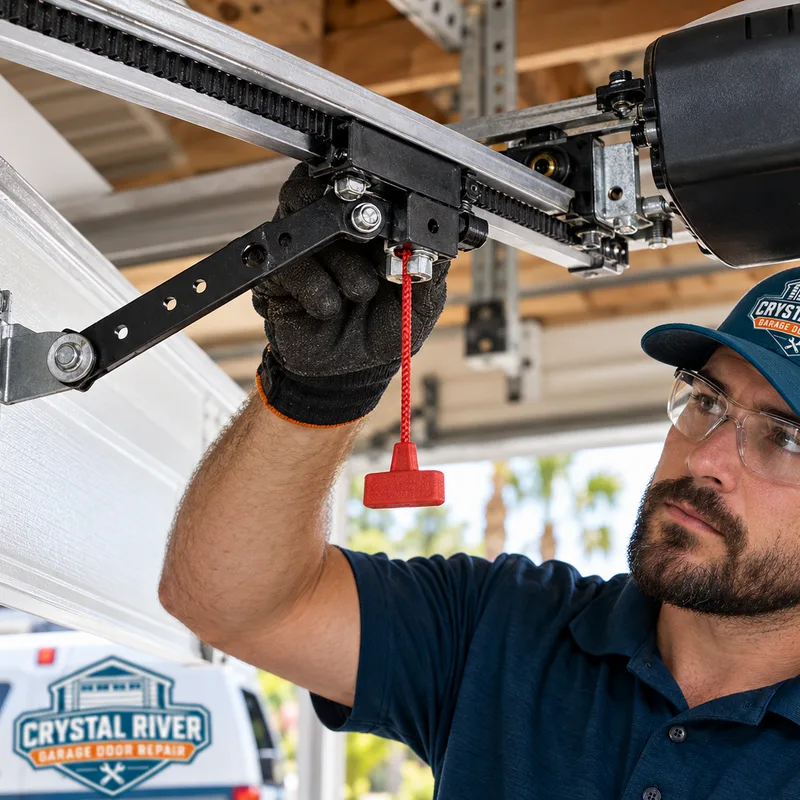
Fault-Finding
The sensor lenses may be dirty, brackets may have shifted, wiring may be damaged, or the close-force and travel settings may need correction. The door and track should also be checked for resistance.
Testing can identify depleted batteries, lost programming, a failed receiver, radio interference or a defective remote. A wall control that still works provides a useful diagnostic clue.
Possible causes include a disengaged trolley, worn drive gear, broken belt or chain connection, or a door problem that prevents safe movement.
A loose chain, worn sprocket, poor rail alignment or binding door hardware can create noise. Tightening the chain excessively can damage the motor shaft and sprocket.
Loose low-voltage wiring, a damaged button or a control-board fault can interrupt operation. The circuit and controls need to be tested rather than bypassed.
Many openers use flashing lights or diagnostic codes to report sensor and control faults. The meaning depends on the manufacturer and model.
Match the Operator to the Door
A new opener should match the door's size, weight, construction and expected use. Horsepower or horsepower-equivalent ratings cannot compensate for a poorly balanced door. The mounting position, available headroom and condition of the existing rail also affect what can be installed.
Chain-drive openers use a metal chain and are known for direct, dependable operation, though chain movement is usually more noticeable inside an attached garage. Belt-drive openers use a reinforced belt and generally produce less vibration. A jackshaft or wall-mounted operator can free ceiling space, but it requires a compatible door configuration and suitable side room near the torsion shaft.
Other choices include battery backup, built-in lighting, wireless keypads and connected controls. During storm-related outages in Citrus County, battery backup can allow limited powered operation, but its capacity depends on the model and battery condition. Manual release access remains important. If the garage has no other entry door, the installation may require an exterior emergency-release arrangement so the door can be disconnected during an outage.
Protective Functions
Photoelectric safety sensors are installed near the bottom of the tracks and project an invisible beam across the opening. If that beam is interrupted while the door is closing, a properly operating opener should reverse the door. Sensors can fail because of bent brackets, damaged low-voltage wire, dirty lenses, poor connections or sunlight affecting the receiver at certain times of day.
Sensor alignment should be corrected at the bracket rather than by taping down a wall button or bypassing the circuit. The reversal system should also be tested with the opener manufacturer's specified procedure. A common field check uses a solid object laid flat beneath the door, but the correct object size and test method come from the model's instructions.
Remote and keypad setup is another part of commissioning an opener. Lost or unknown transmitters may need to be erased from the receiver before the current remotes are programmed again. Homeowners should also know how to use the red emergency-release handle. Pulling it while the door is open can allow an unbalanced door to fall, so manual release should be used with care.
Have the door, motor, controls and safety system checked together so the proposed work addresses the actual cause of the problem.
CALL NOW: (352) 770-7596Common Questions
A closing door commonly reverses because the safety beam is interrupted, the sensors are misaligned or the door is encountering resistance. Bright Florida sunlight can sometimes affect a sensor receiver, while humidity and corrosion may damage brackets or connections. Travel and force settings should be checked only after the door moves freely.
Yes, the cause can be tested at the remote, receiver and opener controls. A dead battery, lost programming, damaged transmitter, locked wall console or receiver fault can produce similar symptoms. If the wall button operates the door, that helps narrow the diagnosis.
Only when the new manufacturer and model explicitly permit the existing rail and it is in suitable condition. Rails, trolleys, belts and chains are not universally interchangeable. Using the components supplied or approved for the new operator protects correct travel and safety operation.
The correct opener depends on door size, weight, construction, balance and use rather than horsepower alone. A technician should first confirm that the door stays balanced and moves easily by hand. Heavy or frequently used doors may call for a different operator than a lightweight single-car door.
Replacement is not automatic after a surge because the damage may be limited to a control board, power component or lost programming. Crystal River thunderstorms can bring outages and electrical disturbances, so diagnosis should include the outlet, opener electronics and controls before replacing anything.
Call for Service
Tell Crystal River Garage Door Repair what the door is doing and which controls still respond. A focused inspection can identify whether you need an adjustment, a replacement part or a properly matched new opener.