The door will not lift
A broken spring removes much of the counterbalance that makes the door manageable. An opener may move it slightly, hum, or stop under the load.
Serving Crystal River, Florida & surrounding areas
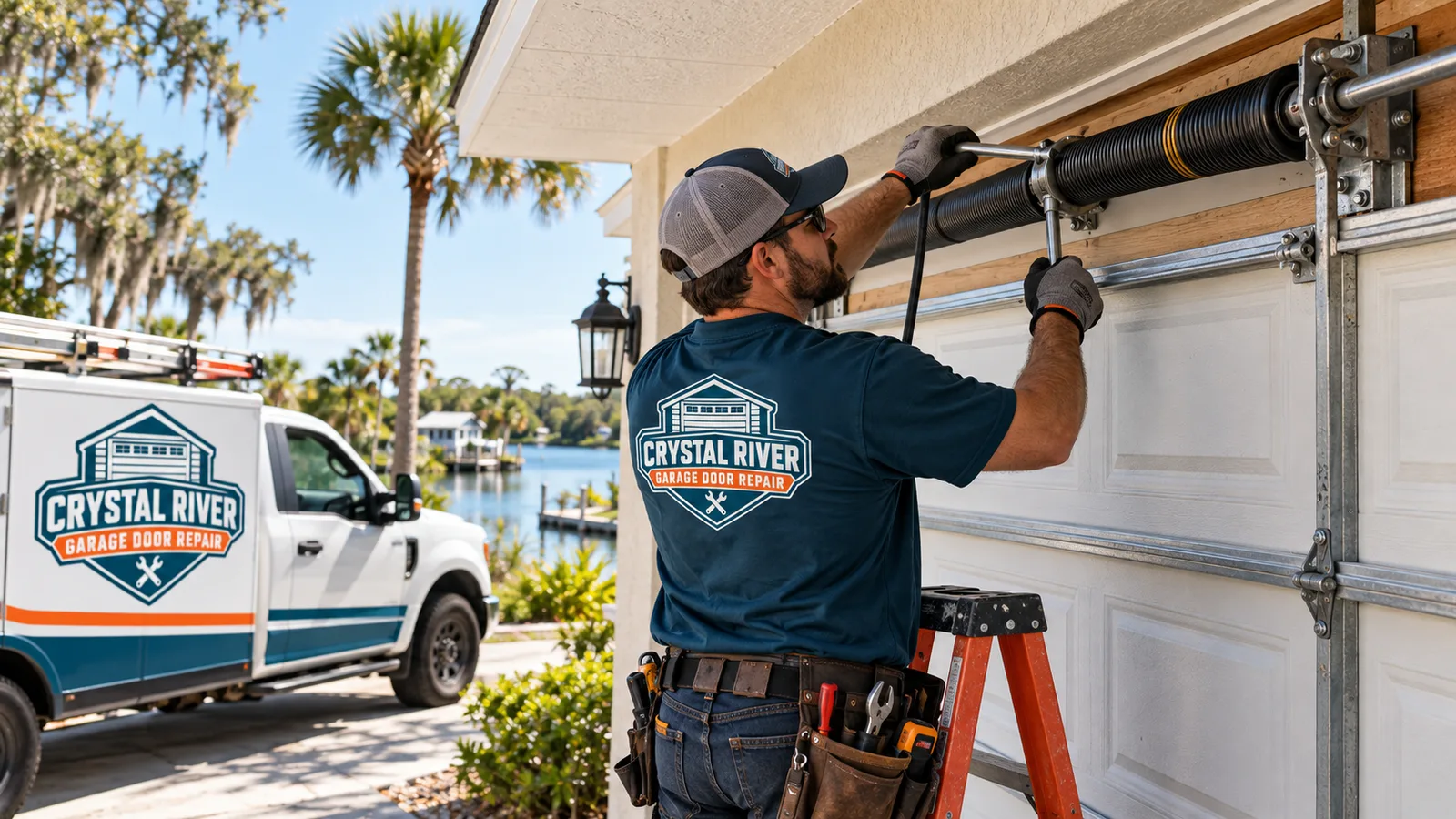
Spring Repair in Crystal River, Florida
Get the door inspected before another cycle strains the opener, cables, or tracks. Crystal River Garage Door Repair replaces worn and broken torsion and extension springs with parts matched to the door.
Spring System Inspection
Crystal River
✓Torsion spring replacement
✓Extension spring replacement
✓Door balance testing
✓Cable and drum checks
Broken Spring Safety
A garage door that slams, hangs crooked, or rises only a foot or two may have a failed spring. Crystal River Garage Door Repair provides garage door spring replacement in Crystal River, FL, for torsion and extension systems. The visit starts with identifying the spring system and checking the door's balance, cables, drums, tracks, and attachment points. That matters because spring size must match the door's weight and lift geometry.
Stop operating a door if a spring has separated, a cable is loose, or the door is tilted in its opening. Do not pull the emergency release while the door is open. Without spring support, the full weight can drop unexpectedly. Keep people and vehicles clear, leave the door closed when possible, and arrange an inspection. For problems that extend beyond the spring system, garage door repair in Crystal River can address the broader operating issue.
Know Your Spring System
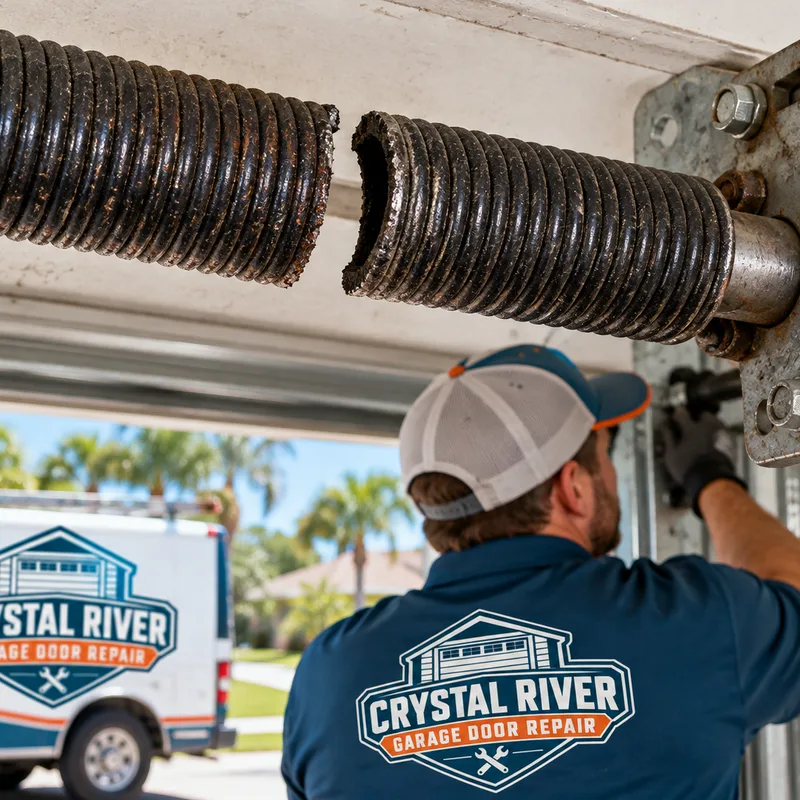
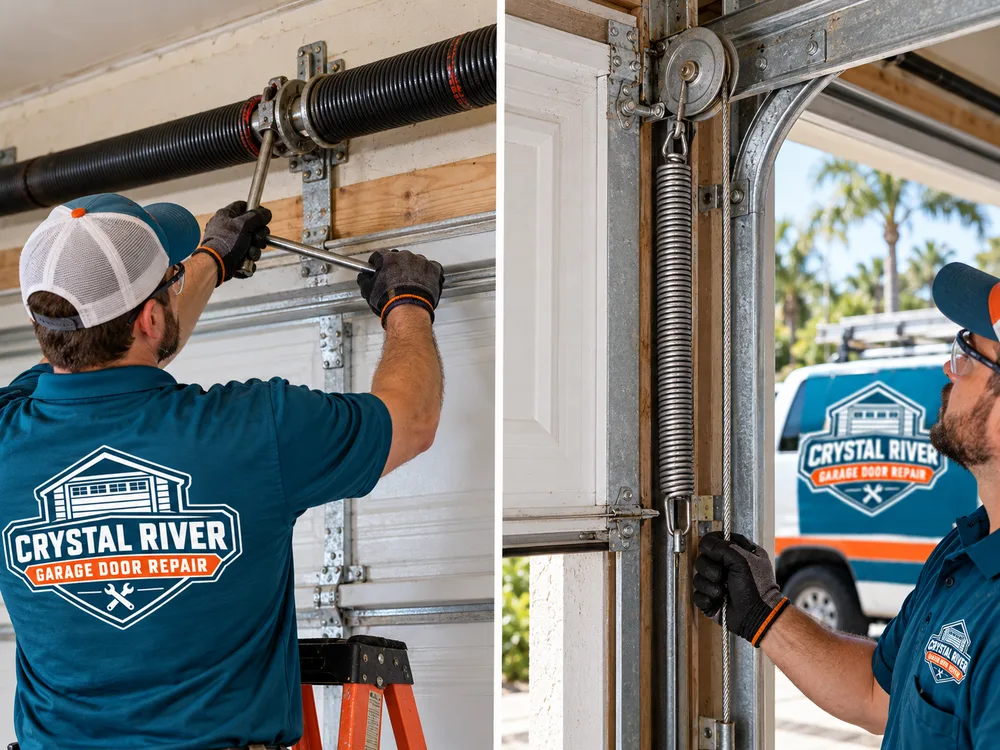
A torsion spring sits on a shaft above the door and transfers torque through cable drums. Some doors use one spring, while wider or heavier doors may use a pair. A visible gap in the coil often confirms that a torsion spring has broken. Other signs include a heavy door, an opener that strains without lifting, or cables that have come off the drums.
Extension springs stretch along the horizontal tracks and usually work as a pair. A failed extension spring may leave one side unsupported, causing the door to rise unevenly or bind. These systems also require properly routed safety cables through the springs. During garage door spring repair in Crystal River, FL, the spring type, wire size, inside diameter, length, end hardware, and door weight all inform the replacement choice.
High humidity and salt-laden coastal air in west-central Florida can encourage corrosion on exposed coils and hardware. Surface rust alone does not prove a spring has failed, but pitting, deformation, separation, or poor door balance warrants closer inspection.
Warning Signs
A broken spring removes much of the counterbalance that makes the door manageable. An opener may move it slightly, hum, or stop under the load.
A weak or incorrectly balanced spring can let the door descend without proper control. Stop using it rather than trying to catch or guide a heavy moving door.
Uneven movement may point to a broken extension spring, a displaced cable, or a cable drum problem. Continued operation can pull rollers against the tracks.
A torsion spring commonly leaves a visible separation when it breaks. The gap may be several inches wide once the stored torque is released.
A spring can release stored energy with a sharp sound. Inspect from a safe distance and avoid touching the spring, shaft, cables, or brackets.
The opener is designed to move a balanced door, not lift its full weight. Repeated attempts can add avoidable stress to the drive system.
The Service Visit
Crystal River Garage Door Repair checks the door in a stable position, identifies the spring system, and looks for loose cables, damaged drums, worn bearings, bent track, or compromised mounting points.
The correct spring is selected using the door's measured weight and the spring system's specifications. Color marks alone are not enough to size every spring accurately.
The door and shaft are secured before old hardware is removed. Torsion springs require proper winding bars; improvised tools can slip under substantial force.
The replacement spring is fitted, cables are seated correctly, and the system is tensioned for the door. On extension systems, paired operation and safety-cable routing are checked.
The door is disconnected from the opener and tested by hand. It should move smoothly and remain near a mid-travel position rather than racing up or dropping. The opener is then reconnected for an operating check.
Matched to Door Weight
Spring Replacement
Balanced for the Door
Garage door springs are counterbalance components. A properly matched system offsets enough door weight for controlled manual movement and allows the opener to guide the door rather than carry it. A spring with the wrong torque can leave the door heavy, cause it to rise on its own, or affect how cables wind on the drums.
Replacing a spring involves more than matching its apparent length. Torsion-spring identification may require wire diameter, inside diameter, relaxed length, wind direction, and the door's actual weight. Extension springs are selected by door weight and compatible hardware. A trained balance check after installation confirms whether the setup behaves correctly.
If one spring in a matched pair has broken, ask whether both should be replaced. The unbroken spring has usually experienced the same operating cycles, but replacing both depends on the condition and compatibility of the installed pair. The inspection should settle that question before work begins.
Local Conditions
Crystal River's humid Gulf Coast climate makes corrosion worth checking on coils, cables, fasteners, bearing plates, and bottom fixtures. Attached and detached garages can also differ in door size, ceiling clearance, track layout, and exposure. Those conditions affect access and parts selection, but the basic standard remains the same: the repaired door should be balanced before the opener is asked to move it.
Spring work should stay focused on the counterbalance system unless the inspection uncovers a connected fault. A cable may have jumped a drum when the spring broke, or a worn bearing may resist shaft movement. Those findings should be explained as separate parts of the scope rather than assumed. Crystal River Garage Door Repair can then outline what is required to restore controlled travel and what, if anything, is optional maintenance.
Avoid spraying an unidentified lubricant on every component. Springs may benefit from a suitable garage-door lubricant applied sparingly, but tracks generally need to remain clean rather than greasy. Never loosen bottom brackets, cable drums, winding cones, or spring anchor hardware while tension is present.
A broken spring can turn a routine door cycle into a heavy, unstable movement. Arrange an inspection before using the opener again, so the spring system can be checked before repair.
CALL NOW: (352) 770-7596Common Questions
It is safer to leave the door closed until the spring system is repaired. A broken spring can make a residential door extremely heavy, and pulling the emergency release may allow an unsupported open door to fall. If a vehicle is trapped, leave the door alone until the spring system and door position have been checked.
Matched springs are often replaced together when one fails, but replacement depends on the system's design and the condition of the remaining spring. Springs installed as a pair typically share the same cycles. Replacing only one with a mismatched part can affect balance, so both springs and the door weight should be evaluated.
An opener should not be used to force a door with a broken spring. The motor and drive assembly are designed for a balanced door, and repeated attempts can strain the opener while the door remains unstable. Stop if the door rises only a short distance or feels unusually heavy.
The correct torsion spring is determined by the door's weight and the lift system's specifications. Wire diameter, inside diameter, spring length, wind direction, drum type, and track geometry can all matter. A faded paint mark or the appearance of the old spring should not be the only basis for selection.
Light surface rust does not automatically require replacement, but deep pitting, flaking metal, coil distortion, a visible break, or poor balance can justify replacement. Crystal River's humid coastal conditions make periodic checks of springs, cables, and attachment hardware sensible.
Spring replacement is not a suitable do-it-yourself task for most homeowners because torsion and extension systems store substantial energy. Winding cones, cable drums, bottom brackets, and stretched extension springs can move violently if released incorrectly. Proper tools and a controlled sequence are needed.
Call for Service
We inspect the spring system, check the cables and related hardware, and match the replacement spring to the door.